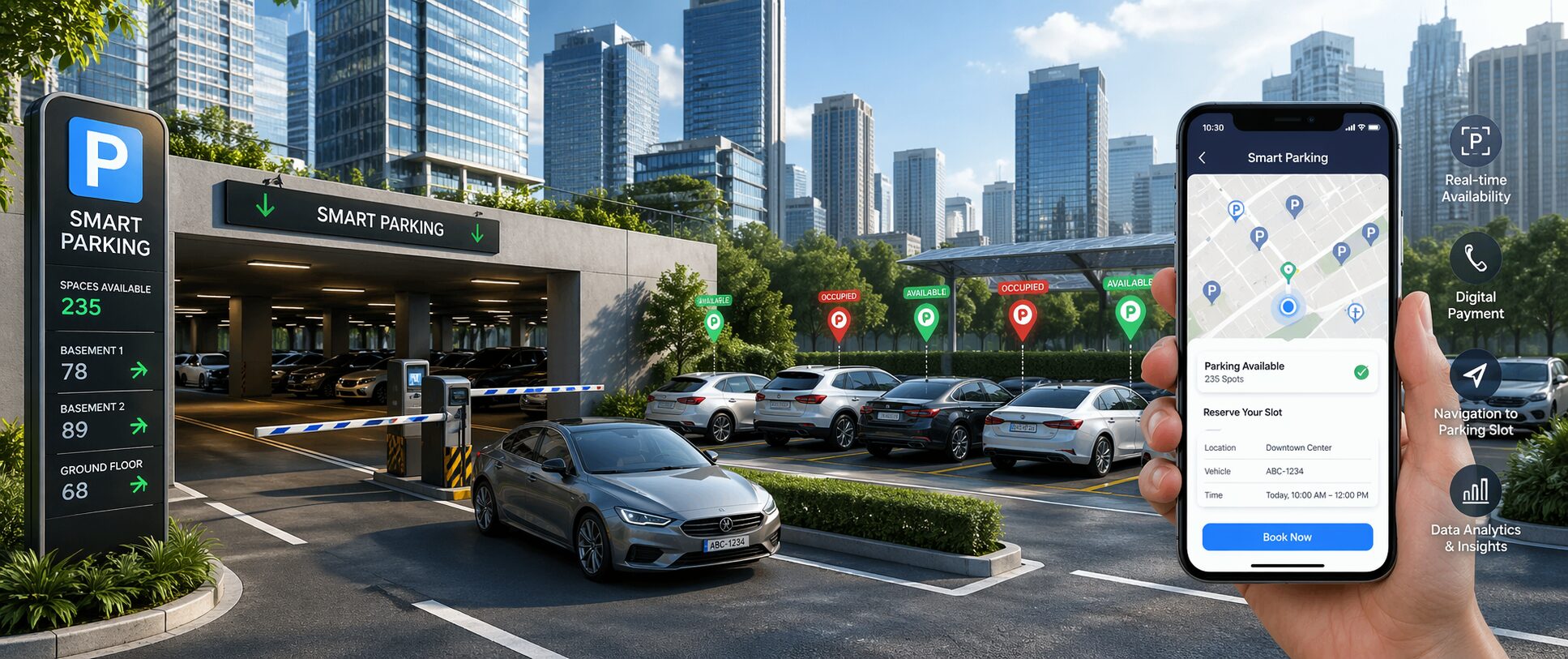
Every driver knows the frustration of circling the same block, burning fuel, watching minutes tick away while searching for a parking spot. This is not just an inconvenience. It is a systemic problem that costs cities billions of dollars and adds meaningfully to urban carbon emissions. Smart parking systems are designed to fix exactly this.
As cities grow denser and vehicle ownership rises globally, traditional parking infrastructure — coin meters, paper permits, static lots — is struggling to keep up. Smart parking technology uses IoT sensors, mobile apps, and real-time data to make parking faster and far more efficient.
What Is a Smart Parking System?
A smart parking system is an integrated network of technologies that detects, processes, and communicates real-time data about parking space availability. Instead of physically hunting for a free spot, drivers are guided to one — sometimes before they even enter a parking area.
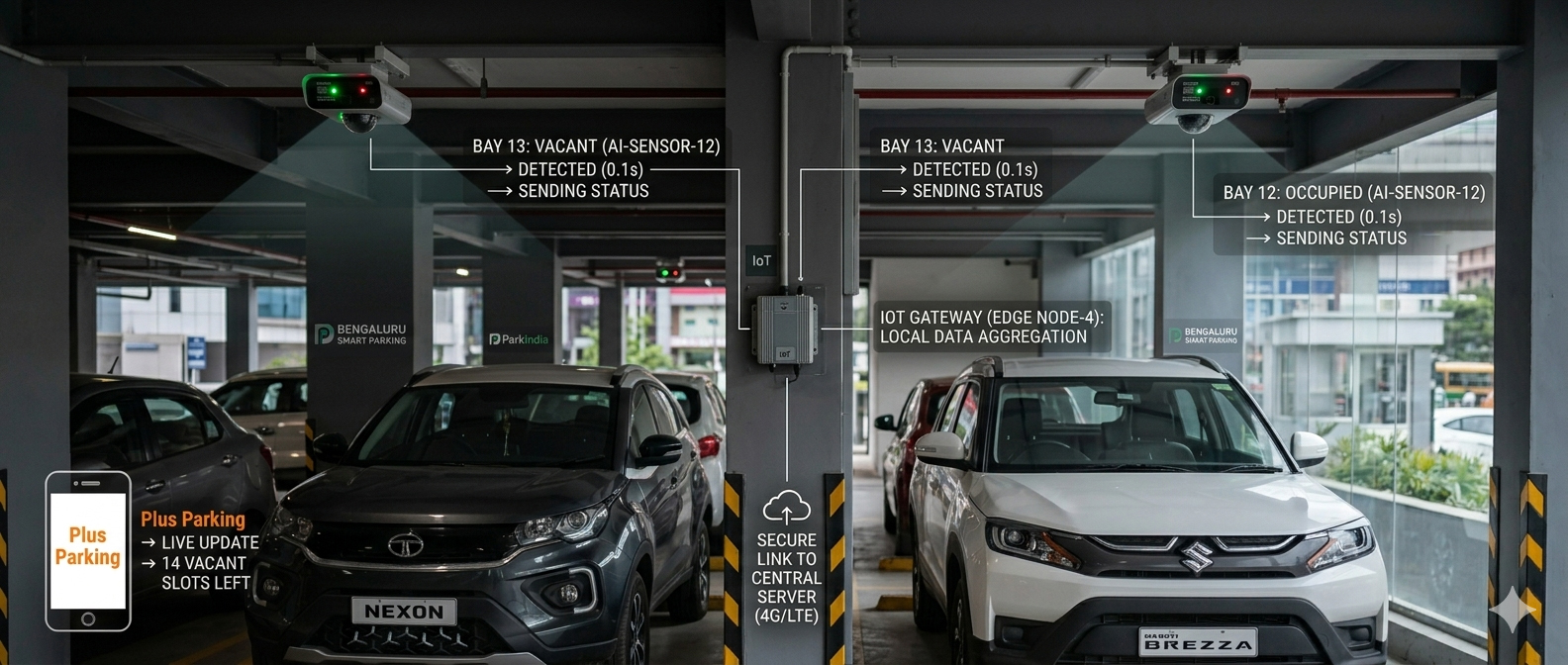
Every smart parking system works across three layers. The sensing layer uses in-ground sensors, cameras, or ultrasonic detectors to identify whether a space is occupied or free. The communication layer transmits that data wirelessly to a central platform in real time. The application layer delivers the information to drivers through mobile apps, digital street signs, and navigation services like Google Maps.
The result is a system where finding parking becomes a data-driven experience rather than a guessing game.
The Urban Parking Problem
To appreciate why smart parking matters, it helps to understand the scale of the problem. Research shows that roughly 30% of urban traffic is caused by drivers searching for parking. The average driver spends 17 minutes per trip looking for a spot. In the United States alone, this parking search traffic generates an estimated 1.7 million tons of CO₂ annually and costs the economy hundreds of billions of dollars.
These numbers point to a compounding problem. The more time drivers spend searching, the worse congestion becomes. Worse congestion means more fuel burned, more emissions produced, and more time wasted. Smart parking attacks the root cause by eliminating unnecessary circling.
How Smart Parking Technology Works
The most common sensor type is an in-ground electromagnetic or ultrasonic device installed in each parking bay. When a vehicle parks over one, it registers the space as occupied and transmits that status wirelessly within seconds.
Camera-based detection
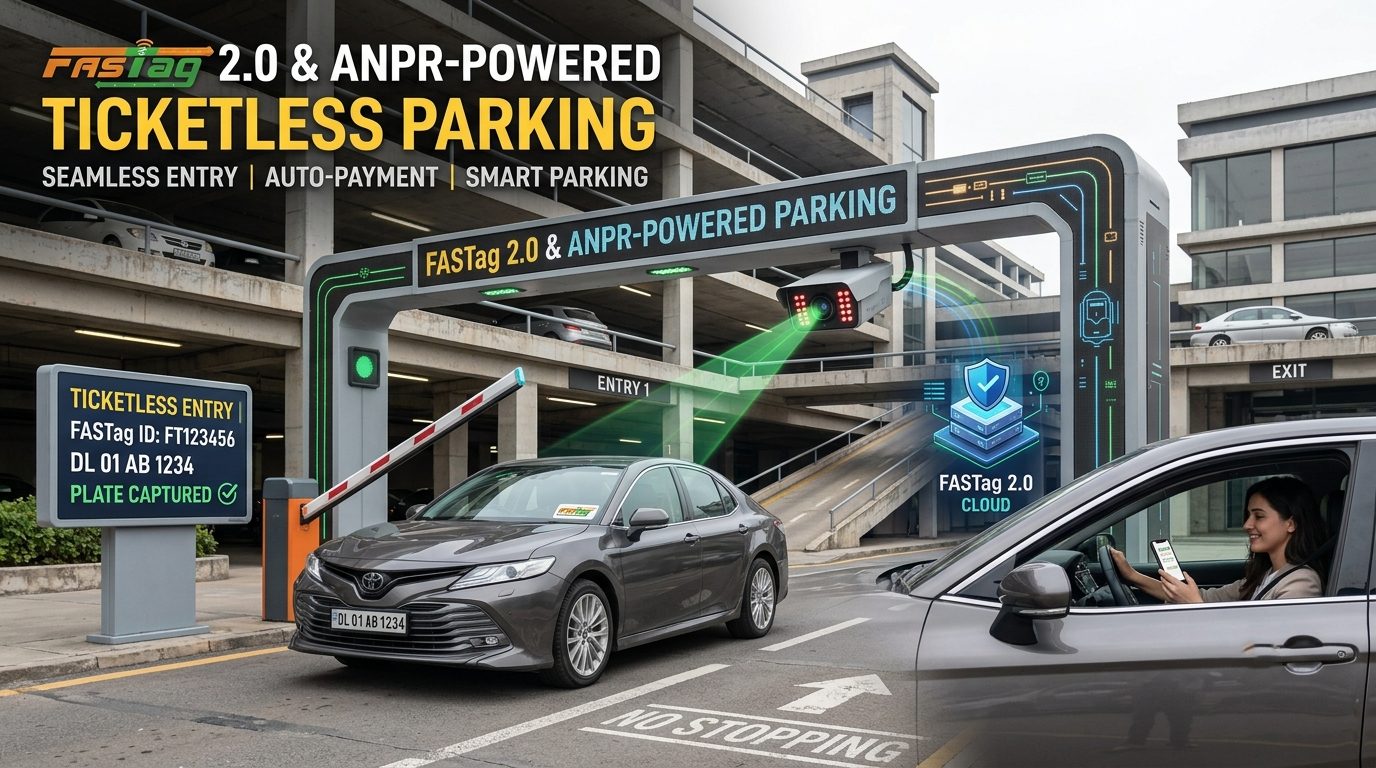
Newer deployments increasingly use overhead cameras with computer vision. A single camera can monitor dozens of spaces at once. This reduces installation costs and adds the ability to read license plates and flag parking violations automatically.
Dynamic pricing
Many smart parking systems also use dynamic pricing. Rates adjust automatically based on real-time demand. When a block is nearly full, prices rise slightly to reduce arrivals. When spaces are plentiful, prices drop to encourage use. San Francisco’s SFpark program used this approach and reduced parking search traffic by up to 30% in pilot zones.
Parking guidance systems
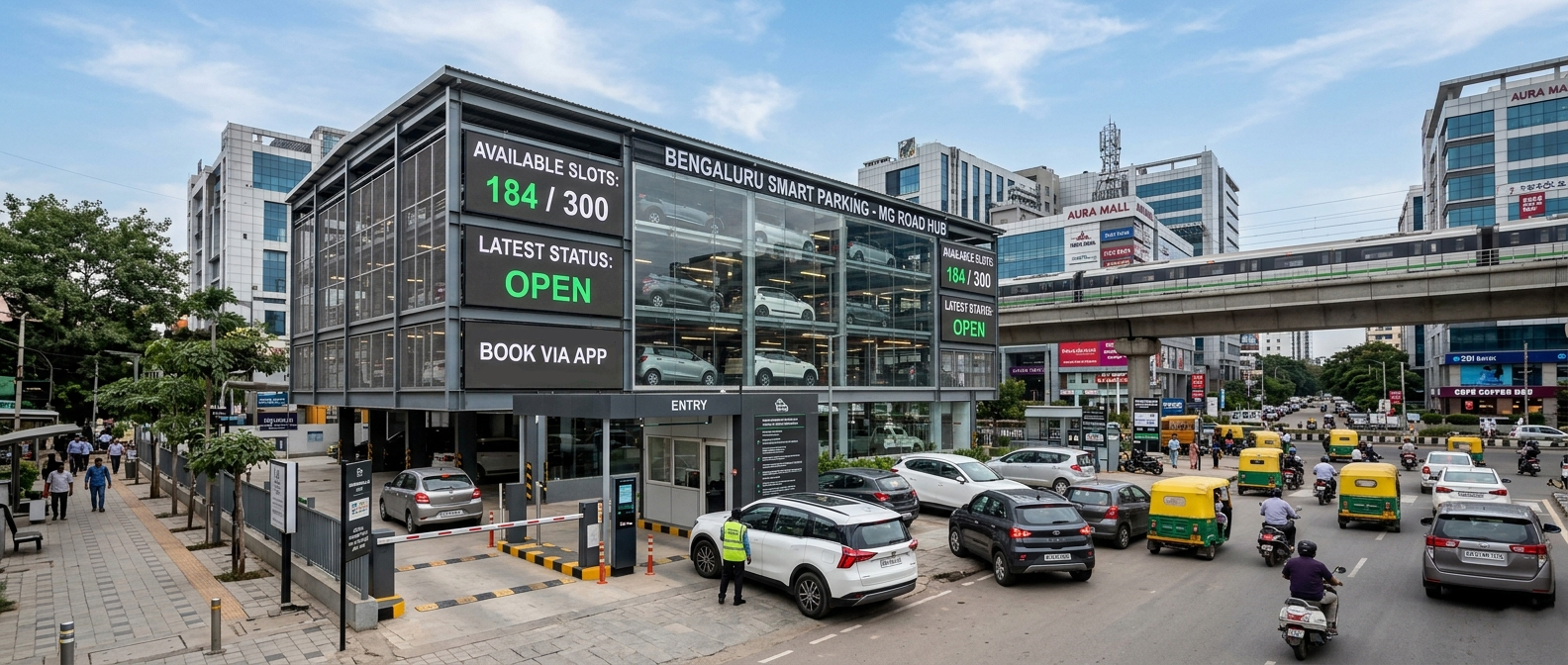
At street level, digital signs display live space counts — “14 spaces, 200m ahead” — directing drivers before they commit to a lane. Inside multi-story garages, overhead LED indicators show green for free and red for occupied, guiding drivers floor by floor to the nearest open bay.
Real-World Smart Parking Examples
Smart parking is live and delivering results in cities around the world.
San Francisco, USA
San Francisco’s SFpark program deployed wireless sensors across 7,000 on-street spaces and 12,250 garage spaces. Dynamic pricing kept roughly 15% of spaces free on each block at all times. The program cut parking search traffic by 30%, reduced greenhouse gas emissions by 25% in pilot areas, and increased parking revenue despite lowering average prices.
Barcelona, Spain
Barcelona deployed over 19,000 in-ground sensors across its street parking network. The data feeds a city-wide app that lets residents find and pay for parking from their phones. The city has reported a clear drop in time spent circling, while gaining detailed data to plan future pedestrianization projects.
Singapore
Singapore’s Housing Development Board integrated smart parking sensors into its public housing estates, which are home to over 80% of the country’s population. A national parking app lets residents check live availability and receive notifications when spaces near their destination become free. The system processes millions of status updates daily.
Key Benefits for Cities and Drivers
Smart parking systems deliver measurable benefits to everyone involved.
For drivers, the gains are immediate. Less time searching for parking means lower fuel costs per trip, less stress, and a more predictable journey. Cashless, app-based payment removes the need to carry coins or return to a meter. Pre-booking options let drivers reserve a space before they leave home.
For cities and operators, the benefits run deeper. Reduced circling traffic means lower congestion and fewer vehicle emissions in city centers. Dynamic pricing generates higher parking revenue without adding new infrastructure. Automated license plate recognition improves enforcement without increasing staff. Most importantly, continuous occupancy data gives urban planners a granular, real-world picture of how parking is actually used — informing decisions about where new infrastructure is needed and where existing land could be repurposed.
The Road Ahead: AI and Autonomous Parking
The next generation of smart parking goes well beyond sensors and apps.
Predictive availability
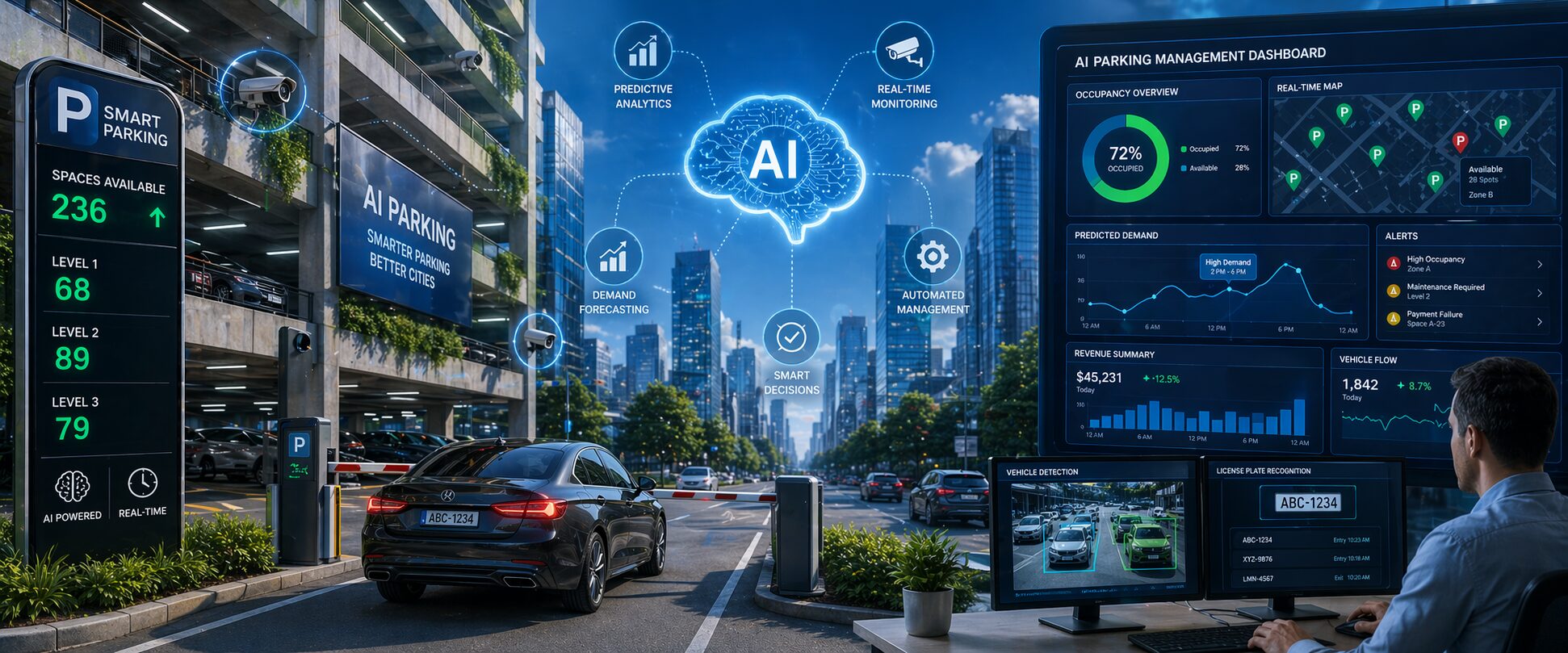
AI models trained on historical occupancy data, local event calendars, weather, and live traffic flows can now predict parking availability 30 to 60 minutes ahead. Rather than showing drivers where spaces are right now, next-generation apps will show where spaces will be available by the time a driver arrives — enabling true advance route planning.
Autonomous valet parking
Several automakers and parking technology companies are testing fully autonomous valet systems. A driver drops their vehicle at a designated zone. The car navigates to a free space, parks itself, and returns when summoned. This removes the need for wide lanes and door-opening clearance, potentially increasing a garage’s capacity by 40 to 60% compared to conventional layouts.
Fewer spaces, smarter cities
The most significant long-term impact of smart parking may be the data it generates to justify reducing parking supply. Cities like Oslo, Helsinki, and Seattle are using parking utilization data to remove minimum parking requirements from zoning codes. Land previously mandated for car storage is being freed for housing, green space, and commercial development. Smart parking, in this sense, may eventually lead to less parking — and better cities as a result.
Frequently Asked Questions
What is a smart parking system?
A smart parking system is a network of sensors, wireless communication, and software that detects real-time parking availability and delivers that information to drivers and city operators.
How accurate are smart parking sensors?
Modern in-ground sensors and camera-based systems achieve 95 to 99% accuracy in occupancy detection under normal conditions. Accuracy can be affected by heavy weather, sensor age, and camera range.
How much does smart parking cost to implement?
In-ground sensor deployments typically cost $300 to $500 per sensor for hardware, plus installation and platform licensing. City-wide programs range from several million dollars for small municipalities to hundreds of millions for large metropolitan deployments.
Is smart parking only for large cities?
No. Campus parking at hospitals, universities, and stadiums, along with private operators like airports and shopping centers, are among the fastest-growing deployment segments — often with faster return on investment than public street programs.