Finding a parking space in a busy city often feels like a lottery. Drivers circle blocks, miss available spots on adjacent streets, and burn fuel in the process. The core problem is simple: drivers lack reliable information about where spaces are free. IoT-based parking systems solve this directly. They turn every parking space into a connected data point that communicates its status in real time.
The Internet of Things — IoT — refers to a network of physical devices embedded with sensors, software, and wireless communication capabilities. In parking, sensors sit in individual bays, detect vehicle presence, and instantly transmit that status to a central platform. From there, the data reaches drivers through mobile apps, digital street signs, and navigation systems. The result is a transparent, live view of parking availability across an entire area — something simply not possible a decade ago.
How IoT Parking Sensors Work
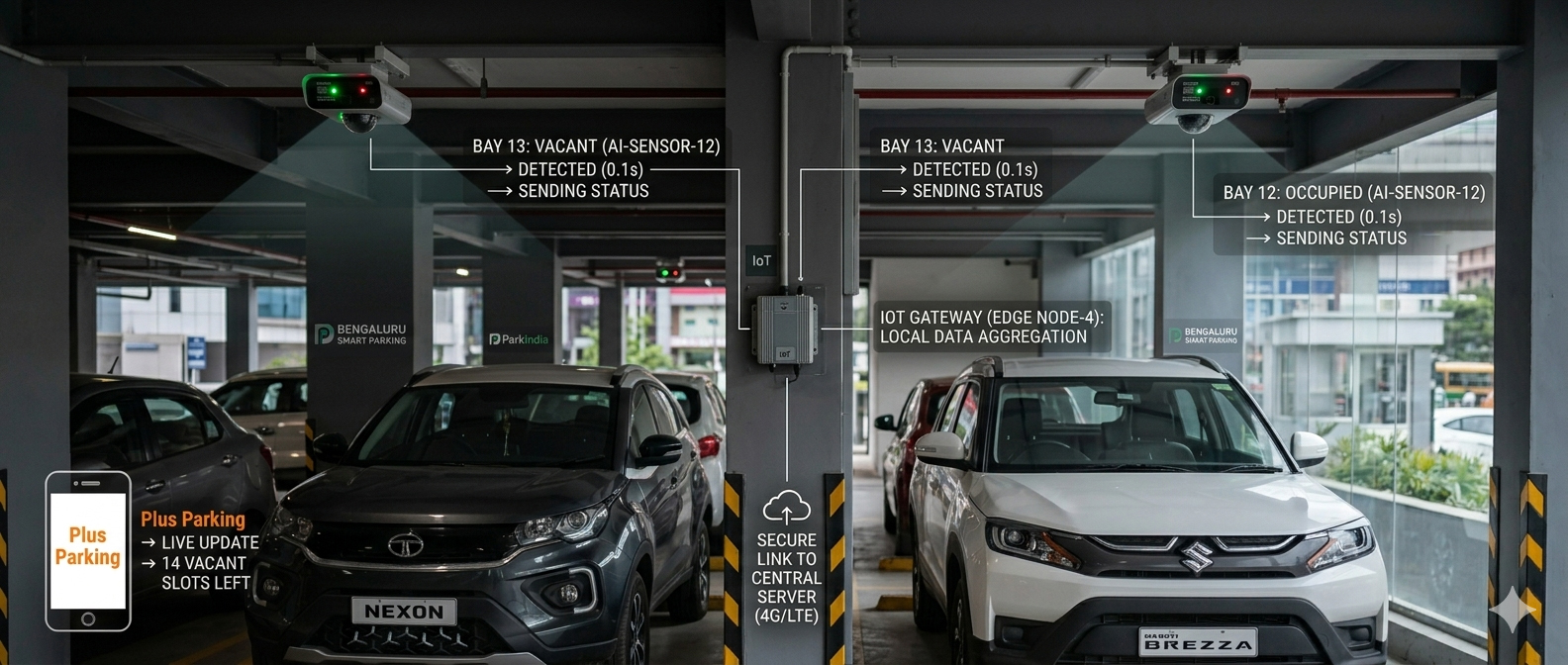
At the heart of every IoT-based parking system is the individual space sensor. These small devices detect whether a vehicle is present and report that status wirelessly to a central server. Updates typically arrive within two to five seconds of a change.
Several sensor technologies are currently in use. Each suits different deployment environments.
Electromagnetic and magnetometer sensors
These are the most widely deployed type in on-street parking. Magnetometer sensors sit flush with the road surface and detect the disruption in the Earth’s magnetic field caused by a vehicle’s metal body. They need no line of sight and work reliably in all weather conditions. Battery life typically runs five to ten years, making them low-maintenance once installed.
Ultrasonic sensors
Ultrasonic sensors emit sound waves and measure how long those waves take to reflect back from an object below. Parking garages commonly use them, mounted to the ceiling above each bay. Each sensor also drives a small LED indicator — green for free, red for occupied — giving drivers instant visual guidance inside the structure.
Camera-based detection
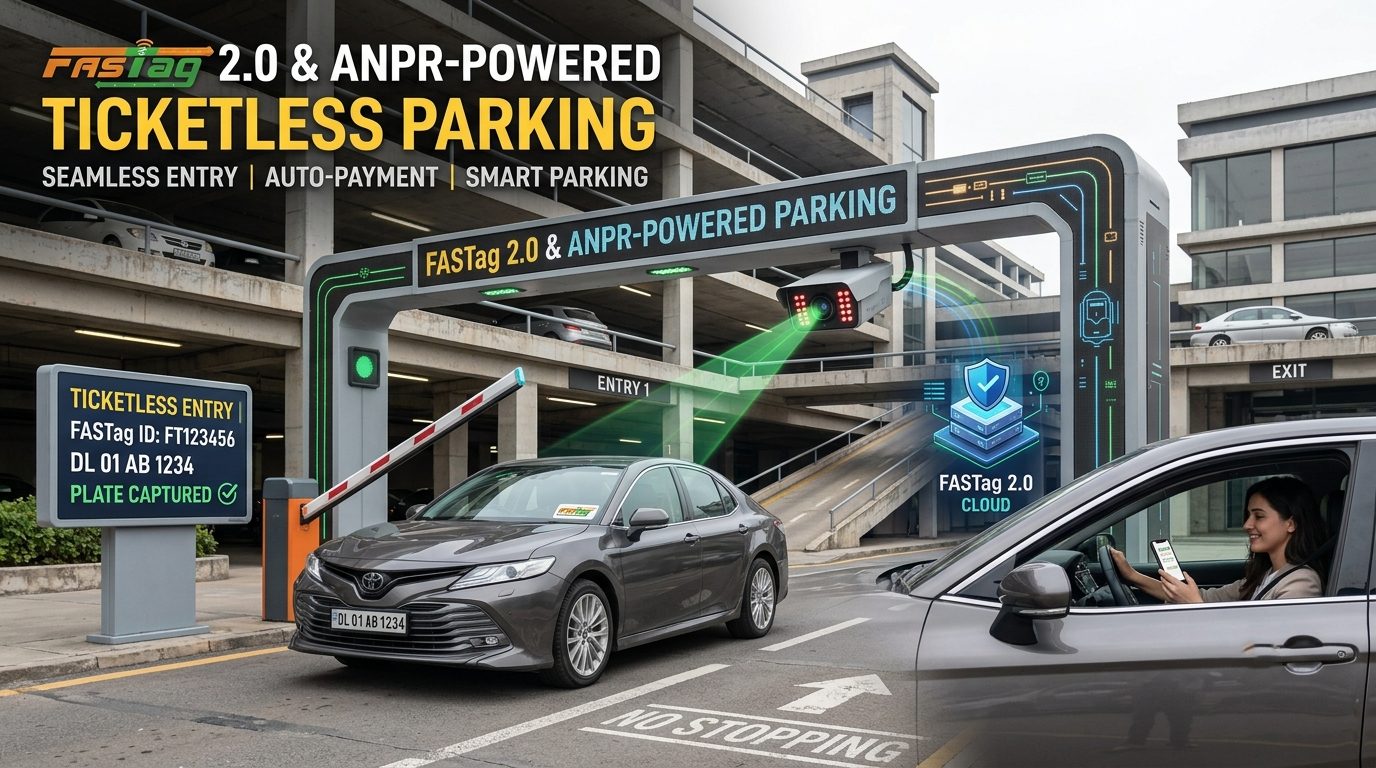
Rather than placing a sensor in every single bay, camera-based systems use overhead cameras with computer vision software to monitor multiple spaces at once. A single camera can cover an entire row or section of a parking area, cutting hardware costs in larger facilities. Moreover, cameras add capabilities that ground sensors cannot offer — such as license plate reading, vehicle classification, and detection of incorrectly parked vehicles.
The Communication Layer: How Data Moves
Detecting occupancy is only the first step. That data must then travel reliably from the sensor to a central platform — at scale, across potentially thousands of sensors spread across a city.
Most IoT parking deployments use LoRaWAN for this purpose. LoRaWAN lets sensors transmit small data packets over several kilometres using very little power. This is why battery-operated ground sensors last for years without replacement. Alternatively, some deployments use NB-IoT — a cellular standard running over existing mobile networks. NB-IoT offers reliable coverage in dense urban environments where signal consistency matters.
Once data reaches the central platform, the system aggregates and validates it. The platform then serves that data through APIs to any connected application — a city parking app, a navigation service, a digital sign controller, or an operator dashboard.
Real-Time Monitoring: What Operators Can See
From the operator’s perspective, IoT-based parking transforms management from a guessing game into a live, data-rich operation.
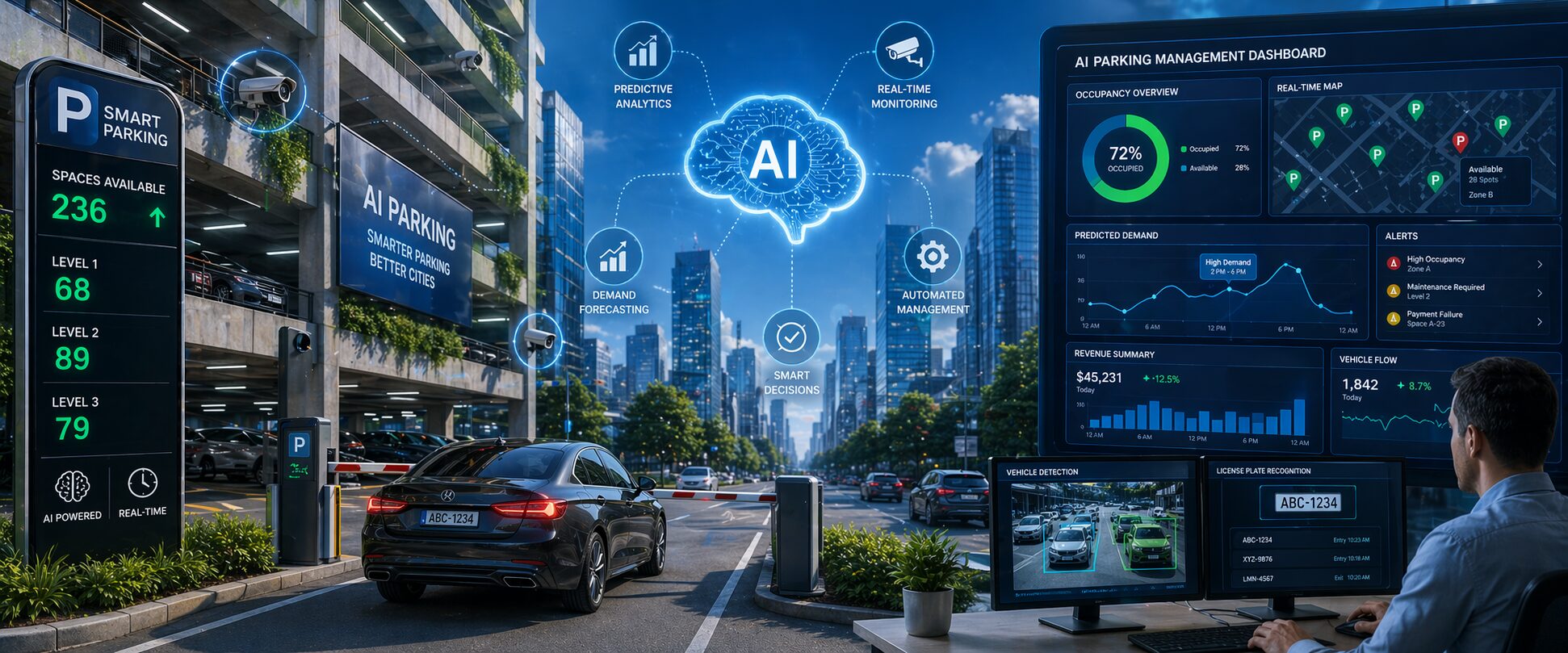
A central dashboard displays occupancy across every monitored space, updating continuously. Operators see at a glance which zones are filling up and which spaces have been occupied unusually long — a potential overstay violation. They also track how overall utilization compares to the same time on previous days or weeks.
Because the data flows continuously rather than at intervals, operators can spot patterns that were previously invisible. For instance, a bay with high turnover between 8am and 10am but empty for the rest of the day may suit time-restricted pricing or a loading zone designation better. Previously, these decisions relied on manual surveys a few times per year. With IoT monitoring, continuous real-world data drives them instead.
Additionally, maintenance teams gain a direct advantage. When a sensor stops reporting, the system flags it automatically. Teams then identify and resolve the fault quickly, rather than discovering it during a manual inspection weeks later.
The Driver Experience: From Searching to Being Guided
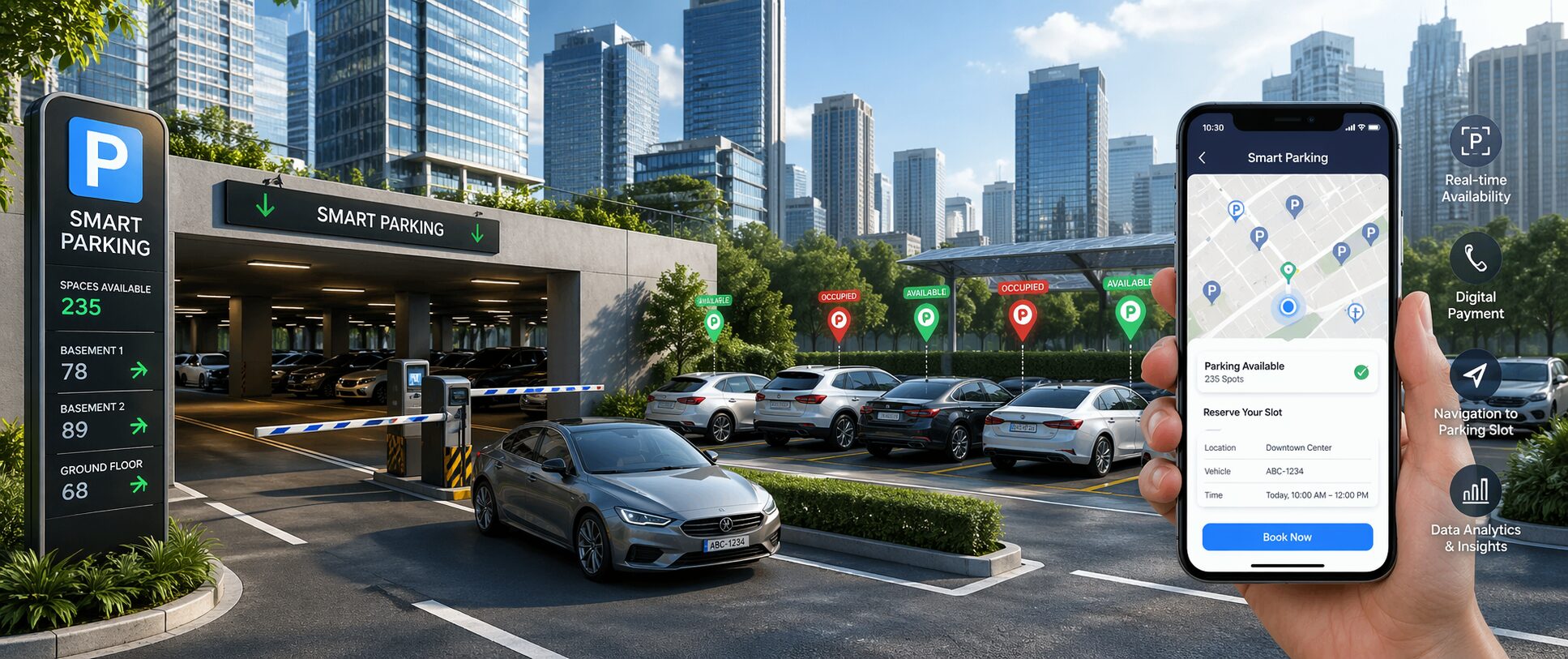
For drivers, the most visible benefit of IoT-based parking is the elimination of uncertainty. Rather than driving into an area and hoping for a space, drivers check availability before they leave — through a parking app, a navigation integration, or variable message signs on approach roads.
In cities with well-implemented IoT parking networks, finding a space becomes part of the navigation experience. A driver who enters a destination into a navigation app receives not just a route, but a recommendation for the most suitable nearby parking facility. The suggestion accounts for current availability, walking distance, and price.
Inside a parking structure, the experience improves further. Ultrasonic sensors, LED bay indicators, and floor-level guidance signs work together to direct drivers to the nearest free space. When a space opens on the third floor while a driver is on the second, the guidance system reflects that change immediately.
This reduction in search time produces measurable knock-on effects. Less time circling means less fuel consumed, fewer vehicle emissions, and lower congestion on surrounding streets — benefits that reach well beyond the individual driver.
Key Considerations Before Deploying an IoT Parking System
IoT-based parking delivers significant operational and environmental benefits, but successful deployment needs careful planning across several areas.
Sensor selection matters more than it might initially appear. The right technology depends on the environment. Open-air on-street bays, covered multi-storey structures, and surface car parks each carry different requirements for weatherproofing, power supply, detection range, and maintenance access. Choosing the wrong sensor type raises fault rates and reduces accuracy.
Connectivity planning is equally critical. In dense urban areas, operators should verify LoRaWAN or NB-IoT coverage before committing to a deployment. Underground parking levels, in particular, often need additional infrastructure — such as signal repeaters — to maintain reliable data transmission.
Data integration requires attention from the outset. An IoT parking system that runs as an isolated silo delivers limited value. To reach its potential, occupancy data should connect with payment systems, enforcement platforms, navigation apps, and city traffic management infrastructure. Agreeing on open APIs and data standards early avoids costly retrofitting later.
Finally, operators should plan for ongoing maintenance explicitly. Modern IoT sensors are reliable, but a network of thousands of devices will experience individual failures over time. Building maintenance workflows, fault alerting, and supplier response agreements into the project from the start keeps the system accurate for the long term.
Frequently Asked Questions
What is IoT-based parking?
IoT-based parking uses networked sensors in individual parking spaces to detect vehicle presence and send real-time occupancy data to a central platform. Apps, navigation systems, and digital signs then deliver that information directly to drivers.
How accurate are IoT parking sensors?
Modern magnetometer and ultrasonic sensors reach detection accuracy of 95 to 99% under normal conditions. Camera-based systems perform similarly and also capture additional data such as license plates and vehicle types.
How long do IoT parking sensors last?
Battery-powered in-ground sensors typically last five to ten years before needing replacement, depending on the technology and reporting frequency. Wired sensors in covered structures generally last longer.
Can IoT parking systems integrate with existing payment infrastructure?
Yes. Most modern IoT parking platforms offer open APIs that connect with existing payment terminals, mobile payment apps, permit management systems, and enforcement platforms. Integration complexity depends on the age and flexibility of the existing setup.
Do IoT parking systems work in underground or covered locations?
Yes, though connectivity planning is essential. Underground environments often need signal repeaters or alternative communication protocols to maintain reliable data flow from sensors to the central platform.